1822 - Iron Steamboat Aaron Manby Crosses the Channel
Updated: Sep 19
Aaron Manby, named after the master of the Horseley Ironworks, Aaron Manby, 46, is a small 116-ton iron-hulled steamship. Jointly designed by Manby, by his son Charles, 18, and especially by Captain Charles Napier, 36, she was launched last year. She is up to date of innovation. She is obviously meant to prove validity of Napier's conceptions and of a Manby's invention.
¤ Manby is a talented civil engineer. In 1813, he patented a technique to form blocks of cast iron to build up bridges, which makes his fortune. Last year, he patented an oscillating engine to fit into ships. This sort of engine is exceedingly compact and simple, thus it fits into a small vessel and it is affordable in comparison with the beam engine, as used by Robert Fulton, or with the side-lever one which appeared six or seven years ago.
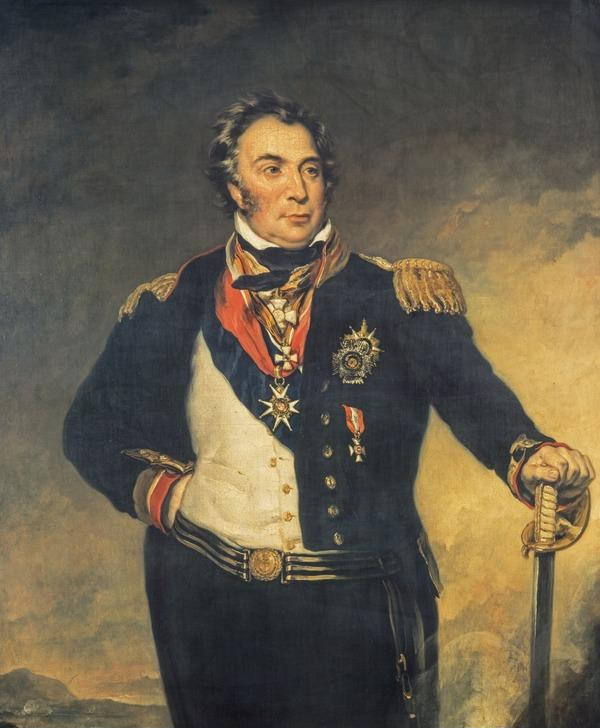
¤ Charles Napier is an outstanding naval officer, having valiantly participated in a number of actions against the French during the lengthy Napoleonic wars. He was made a Companion of the Bath in 1815. Highly interested in a wide scope of technical and social innovations in the navy, he advocates steam, iron, innovation in ship design, innovative tactics, as well as abolition of press, and abolition of flogging - which has earned him the reputation of an eccentric scourge amongst the many conservative naval heads.
¤ This vessel is not the first one to be made of iron. As early as 1787, famous Iron Master John Wilkinson had already built a 70-foot long iron-plated barge. Her framework was still made of wood but the planks were replaced by iron plates.
¤ In 1809, Robert Dickinson and Richard Trevithick proposed to make hulls as well as rigging of iron, partly at least. Dickinson patented his proposition of an iron hull in 1815. He met biting irony from ignorant shipwrights who could not overcome their mental obstacle that iron cannot float - unless it forms a hollow body, of course, which proved to be out of reach for a common mindset.
¤ The first all-iron boat was another barge, Vulcan, launched in 1819, two years before Aaron Manby.
The steamboat was fitted with the first Mansby's oscillating engine which delivers 30 horses-power. A speed of eight knots was expected, nine have been achieved. She displays a 47-foot funnel over her 106-foot long hull, which gives her a distinctive profile. The purpose of this very high funnel is securing natural draught at the furnace. She has very narrow sidewheels of two feet and a half each - a constraint of her final purpose of navigating on the Seine river, especially passing locks.
The ship has just crossed the Channel under Charles Napier's command for her maiden's voyage, got to Paris where her base has been established, and where she created much thrill at her arrival. She is supposed to be joined by a few sisterships to form the Compagnie des Bateaux en Fer navigating between Paris and Le Havre.
____________
IN RETROSPECT FROM TODAY
Note A - on the fate of the company
Napier has finally got six vessels of the same model navigating on the Seine until the company falls into bankruptcy in 1827. They were sold to a French company which operated them on the Loire river till 1855.
Note B - on Charles Napier's carrer
Napier takes a brilliant part in the war of the Portuguese Liberals against usurper Miguel in 1832-1834. He also takes part in the Syrian-Ottoman war in 1839-1842. He wins a land battle at Boharsef in 1840 in substitution for the general who has fallen ill, which is already an outstanding event, but he does something even more astonishing by negotiating a peace with the ruler of Egypt on his own initiative, provoking his admiral's anger - a treaty which was hopefully confirmed by Foreign Secretary Lord Palmerston.
____________
CREDIT
Engraving after John Simpson - Portrait of Charles Napier - © National Galleries of Scotland


Comments